One of the most persistent leadership paradoxes is this:
Toxic bosses often remain in power — while ethical and competent leaders are removed.
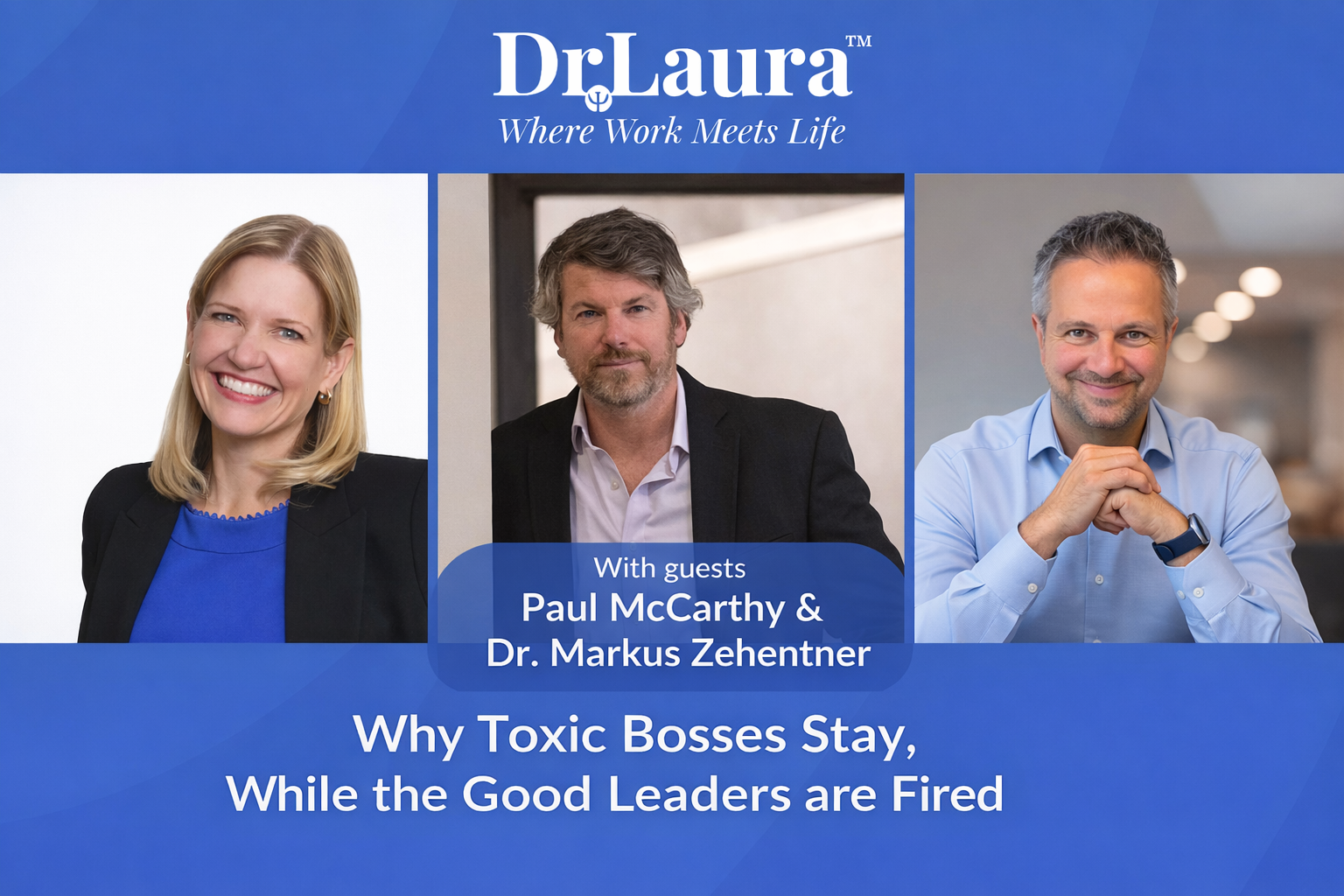
In a recent conversation on Where Work Meets Life™ with Dr. Laura and Paul McCarthy, we explored this paradox from multiple angles: leadership systems, organizational culture, personal experience, and structural dynamics.
This contribution sharpens one specific dimension of that discussion:
The incentive structures and evaluation mechanisms that determine leadership survival.
The Wrong Questions
Most discussions about toxic leadership focus on personality: Why are some leaders narcissistic? Why do people tolerate toxic behavior? Why don’t employees speak up These questions matter. But they are incomplete. The more consequential question is:
Why do systems protect toxic leaders?
Toxic leadership rarely survives because of personality alone.
It survives because certain behaviors align with what the system rewards.
Structural Drivers of Toxic Leadership Survival
Across sectors and contexts, similar patterns appear.
1. Short-Term Optics Over Long-Term Integrity
If performance evaluation is driven by quarterly results, visible decisiveness, or headline metrics, leaders who deliver optics gain protection — even if long-term damage accumulates beneath the surface.
Human cost is externalized.
Performance credit is internalized.
2. Managing Up Outweighs Managing Down
In many organizations, leadership survival depends less on how effectively one leads teams and more on how convincingly one manages perception upward.
Curated narratives, selective information flow, and strategic alignment with power structures create a survival advantage.
Competent team leadership alone does not.
3. Fragmented Accountability
When governance mechanisms are diffuse or weak:
- Harm does not travel upward.
- Dissent is individualized.
- Scapegoats are easier to produce than systemic reform.
In such environments, toxic behavior can persist because no single mechanism decisively interrupts it.
4. Evaluation Systems Reward the Wrong Signals
Dominance can be mistaken for strength. Overconfidence for competence. Loyalty for integrity. Decisiveness for sound judgment. When evaluation systems overvalue visibility and confidence, certain toxic traits become structurally advantageous.
Why Ethical Leaders Become Vulnerable
The paradox becomes clearer when we look at the other side.
Ethical leaders often:
- Increase transparency
- Challenge misaligned incentives
- Resist unethical shortcuts
- Prioritize long-term stability
Transparency exposes misalignment.
Resistance creates friction.
Friction threatens entrenched interests.
In systems optimized for perception and short-term alignment, integrity can become a liability.
Good leaders are not removed because they lack competence.
They are removed because they disrupt distorted equilibrium.
This Is Not a Culture Issue. It Is a Design Issue.
Framing toxic leadership purely as a cultural or psychological problem obscures its structural dimension.
For boards and senior leaders, the real question is not:
How do we develop better personalities?
But:
How do we redesign incentive structures and evaluation systems so that integrity is rewarded — and manipulation is not?
Without structural recalibration:
- Talent exits first
- Innovation declines
- Governance erodes
- Reputation becomes fragile
- Strategic decay sets in slowly — then suddenly
Companion Brief
For a deeper structural analysis — including research references and governance implications — you can access the full Podcast Companion Brief here:
These systemic dynamics are explored in greater depth in Breaking Free from Toxic Leadership, particularly regarding manipulation patterns and the organizational mechanisms that protect toxic leaders from scrutiny.
Leave a Reply